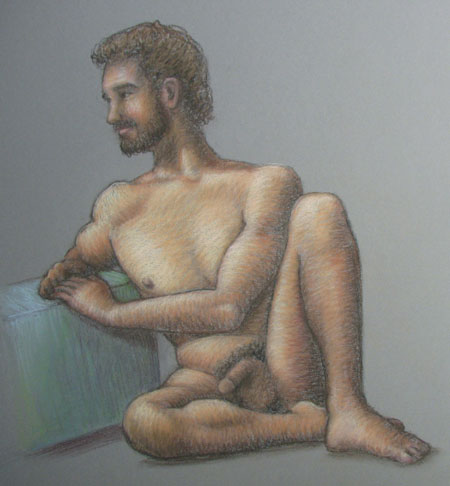
Sudanese Portrait

I will be working on illustrations for a children’s book about a Sudanese boy who comes to America through many trials. As a first step, I wanted try different methods of working. As a test, I did a portrait with watercolor under hard pastel. I used a 140lb Arches paper on a block, sanded to work better with pastel. I would like to find a smoother paper, it has a rougher look than I would like. I’m also going to test pastel paper without using watercolor.
Landscape Design in Pastel

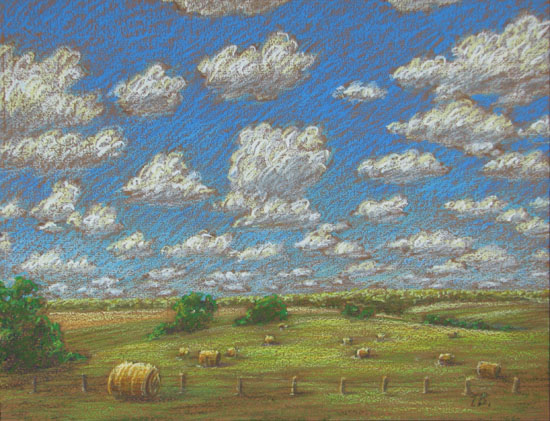
I was able to make bold bright strokes over the faint color I blocked in, except the yellow and gold on the hay bails doesn’t have the pop that I would like it to, but I’m happy with the sky. I will play some more this week, experiment with different brands and effects.

Designing a Landscape

I thought oil pastel might be useful for designing a landscape to be painted on a larger scale. For working out composition and color issues. I’m also hoping the painting might pick up some of the rhythm and movement from the marks in the pastel.

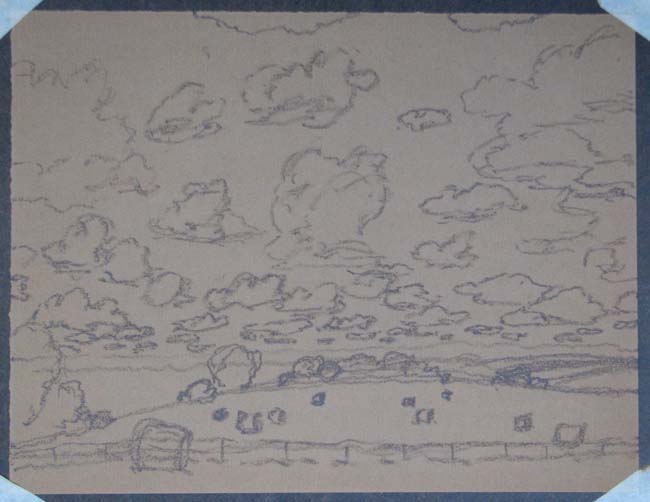
Brown paper is a good neutral for landscapes, like the dirt is already present underneath. I drew rough line in umber oil pastel of my landscape.

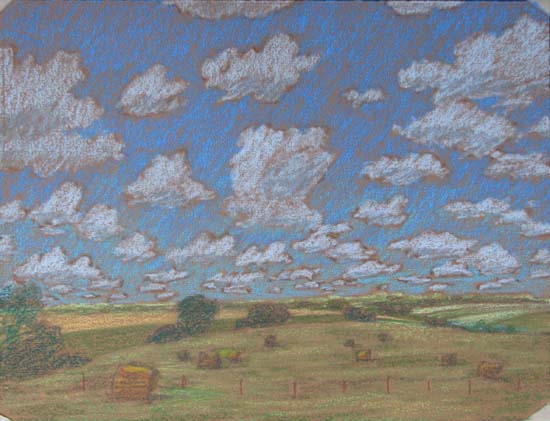
Next I faintly blocked in the midrange tones for the composition, deliberately not committing to any bold marks at this point. Tomorrow I will put in the bold marks and post the final if all goes well.

Oil Pastel Test

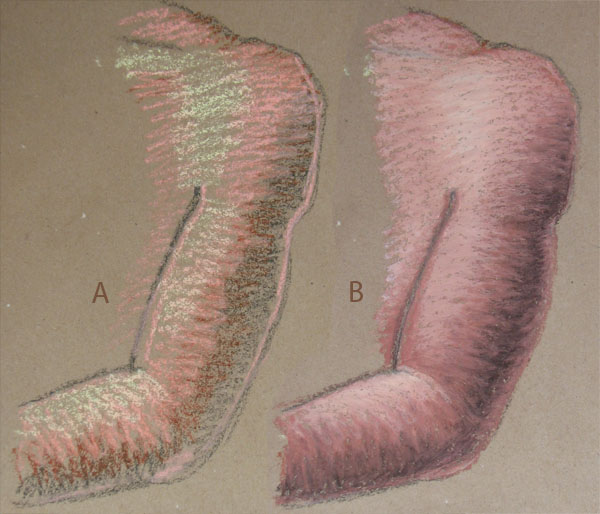
I wanted to compare a softer brand of oil pastels. The left is what I used for the last pose of the girl, Neopastels. At the right is Sennelier’s Oil Pastels. The Sennelier’s are only darker, because they’re the only colors I have at the moment. Senneliers blend more readily and look softer and fill more holes in the paper. For the purpose of rendering figures, that is what I want.

On this test I wanted to try soft on top of hard, to rough in with the Neopastels, and finish with the Sennelier’s. A is step 1, B is Step 2.
That worked well. It allows the ability to rough it in and make changes, and once satisfied to put on the finishing layer without creating a muddy mess. I will try the Sennelier’s at life drawing group once a better selection of colors in my tool box.

Live Female Nude (WIP)

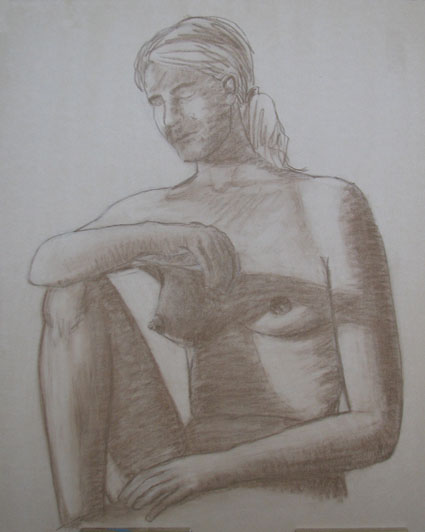
At one point I almost through this one out the window! I drew it at larger scale, and wasn’t sure if my proportions were right, because I couldn’t see what I was doing. I had sanded the paper for oil pastel, but since I thought it was a lost cause, I just took a regular dark pastel and shaded it. The surface was too smooth for regular pastel, and it made for stark shading. Worse after seeing it shaded I could see that the drawing was solid. Tomorrow I will attempt to ressurect it with oil pastel. Will oil pastel cover it?

Testing a Media

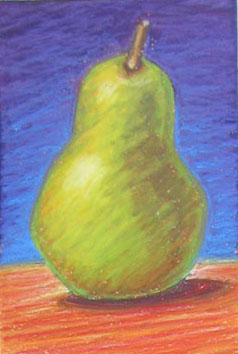
I would like to use pastels to quickly work out designs for paintings. That is only if it’s quicker. Here I am testing oil pastels. You can’t test them without seeing how they behave on different surfaces with how you would work with them. Here I sanded Arches Watercolor Paper, it sands very nice. I put a layer of burnt sienna watercolor to darken the paper. The oil pastel seems to bond well on this paper. I like the feel of it, but soft and more blended.

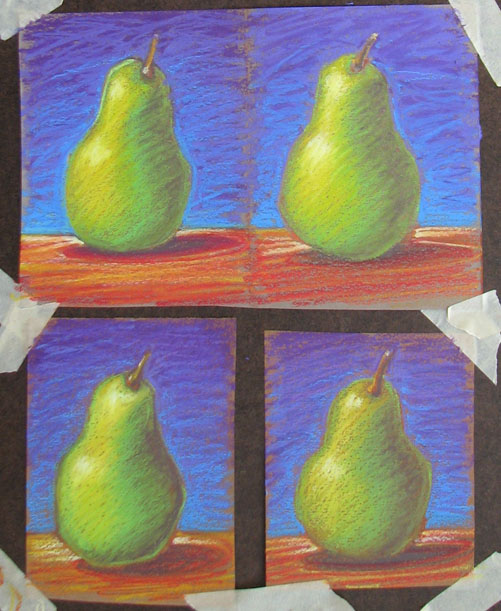
These are brown Pastel Papers the top Canson and the bottom is Strathmore, left ones are sanded, and right is raw. I prefer the sanded, and the like the tooth of Canson best. I may have try the watercolor again after doing all 4 of these. I like using a pears, they’re not just round, they’re form is subtlely blockish.

Last Night’s Life Drawing

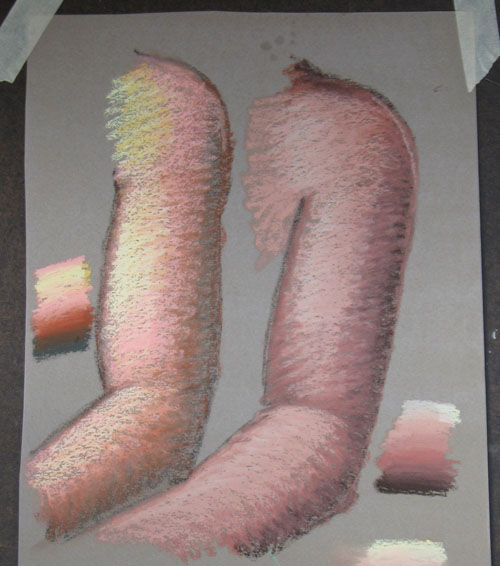
I tried oil pastels on this pose, called Neopastels. The paper was a bit rougher than I liked, Canson, but the color paper was the best I had available to me at the time. I like the fine color adjustment the oil pastels allow. I like the buttery feel of the media. There are many supports possibilities I could try marking on, and many ways of fixing the surface, I can test.